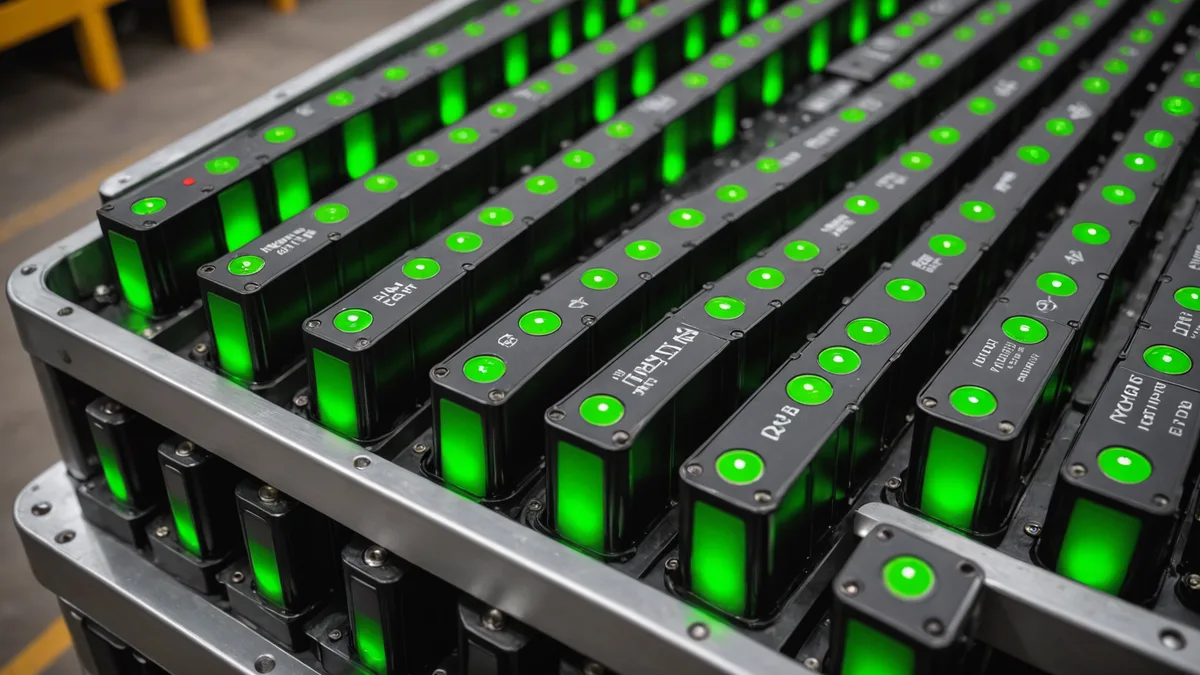
Owning your battery packs sounds like control. You buy the packs, you manage the packs, you know exactly where each one is and what condition it is in. For fleet operators coming from a fuel-dependent model, the battery ownership instinct makes intuitive sense: fuel is a consumable you buy at the pump, so why not own the EV equivalent?
Battery ownership at fleet scale is a different problem than fuel management, and the ownership instinct often leads to suboptimal economics once you trace through the implications. Understanding why takes a close look at how battery packs actually behave in a shared fleet context versus a pooled network context.
Utilization: The Core Economics Problem with Owned Packs
A battery pack owned by a fleet operator is dedicated to that fleet's vehicles. When vehicles are on the road, the packs are in use. When vehicles are parked for charging, the packs are attached to a vehicle but not delivering value: they are in the cost column (capital, depreciation, charge cost) without being in the revenue column.
The average electric scooter in fleet delivery use in India is actively delivering for perhaps 8-10 hours of a 24-hour day. For the remaining 14-16 hours, the pack is sitting in a parked vehicle, either charging or waiting for the next shift. That is 40-58% active utilization. The capital cost of the pack is running continuously even during idle hours.
A pooled battery network operates differently. Packs that have been used by one rider and returned to a station are immediately available to the next rider who needs one. A pack does not sit idle because its "owner" has parked their vehicle. Across a network of multiple fleets and individual riders using shared stations, the active utilization rate of each pack is substantially higher than in a single-fleet-owned model. More utilization from the same capital base means lower effective cost per unit of energy delivered.
Degradation: Who Carries the Risk
Battery packs in fleet use degrade. The rate of degradation depends on cycling depth, ambient temperature, charge rate, and the age of the pack's cell chemistry. In Pune's climate and typical fleet use patterns, meaningful SoH degradation, meaning enough capacity loss to cause rider range problems mid-shift, typically appears after 18-24 months of daily use.
A fleet that owns its packs absorbs this degradation directly. When a pack's SoH drops to 70-75% and it can no longer reliably complete a shift's range requirements, the fleet operator faces a replacement decision: buy a new pack at INR 20,000-40,000 per unit, or continue operating with a degraded pack and accept the rider experience and reliability consequences. Over a 3-year fleet operating period, pack replacement cycles can add INR 5-10 lakh to a 20-vehicle fleet's total operating cost.
In a pooled model, this risk belongs to the network operator. The per-swap fee already prices in the cost of managing pack lifecycle: monitoring SoH, retiring packs at appropriate thresholds, replenishing the network's pack inventory. When you use a BatteryPool station, you are using a pack that has been validated as above the SoH threshold for reliable service. The degraded pack problem is handled before it reaches the rider.
Maintenance and Operational Overhead
Pack-owning fleets need to track each pack's state, manage the charge cycle for each unit, and conduct periodic physical inspections for damage or cell swelling. For a 20-rider fleet with 20 packs plus a few spares, this is manageable but requires dedicated attention. For a 5-rider micro-fleet or a solo operator with 2-3 packs, the management overhead is disproportionate to the fleet size.
One argument for fleet-owned packs that is legitimate: complete visibility into every pack's condition at all times, including custody chain if riders take packs home. Some fleet operators have found that shared pack systems create accountability issues when packs are misused or improperly stored. This is a real operational concern that pooled networks address differently at the systems level, through per-pack tracking and station custody rather than per-rider pack assignment.
Capital Deployment: Where the Money Goes
For an early-stage delivery fleet that is also managing vehicle acquisition, rider recruitment, and platform relationship development, battery pack capital is competing with other uses of a limited INR budget. A 20-rider fleet spending INR 6-8 lakh on pack acquisition is deploying capital that could alternatively go toward additional riders, software tools, or working capital reserve.
Per-swap pricing converts that capital outlay into a variable operating cost that scales with actual utilization. In months with lower order volume, the fleet's energy cost drops automatically because they are making fewer swaps. In months with high volume, the cost rises proportionally, but so does the revenue. This is a more natural cost structure for an operational business than a large upfront capital commitment to depreciating assets.
The Honest Case for Owned Packs
Battery ownership makes economic sense in a few specific scenarios. A large fleet with its own depot, predictable shift patterns, and the scale to manage a charging operation efficiently can potentially achieve lower per-unit energy cost through owned infrastructure and own packs, particularly if they have favorable electricity tariffs. Fleet-owned packs also give complete control over the charge schedule and pack condition, which matters for fleets with specific SoH tracking requirements or specialized vehicle compatibility needs.
We are not saying fleet-owned packs are always the wrong choice. We are saying that the instinct to own packs often leads fleets to undervalue the operational flexibility, risk transfer, and capital efficiency that a pooled model provides, and that the comparison is worth doing carefully with your actual fleet economics rather than defaulting to ownership because it feels more like control.
In our Pune pilot, the fleets that moved to pooled swap showed the sharpest improvement in energy cost per delivery delivered, not because the per-swap fee is magic, but because eliminating stranded capital, reducing downtime, and removing replacement risk combined to produce a more efficient total cost structure than the owned-pack alternative they were running before.