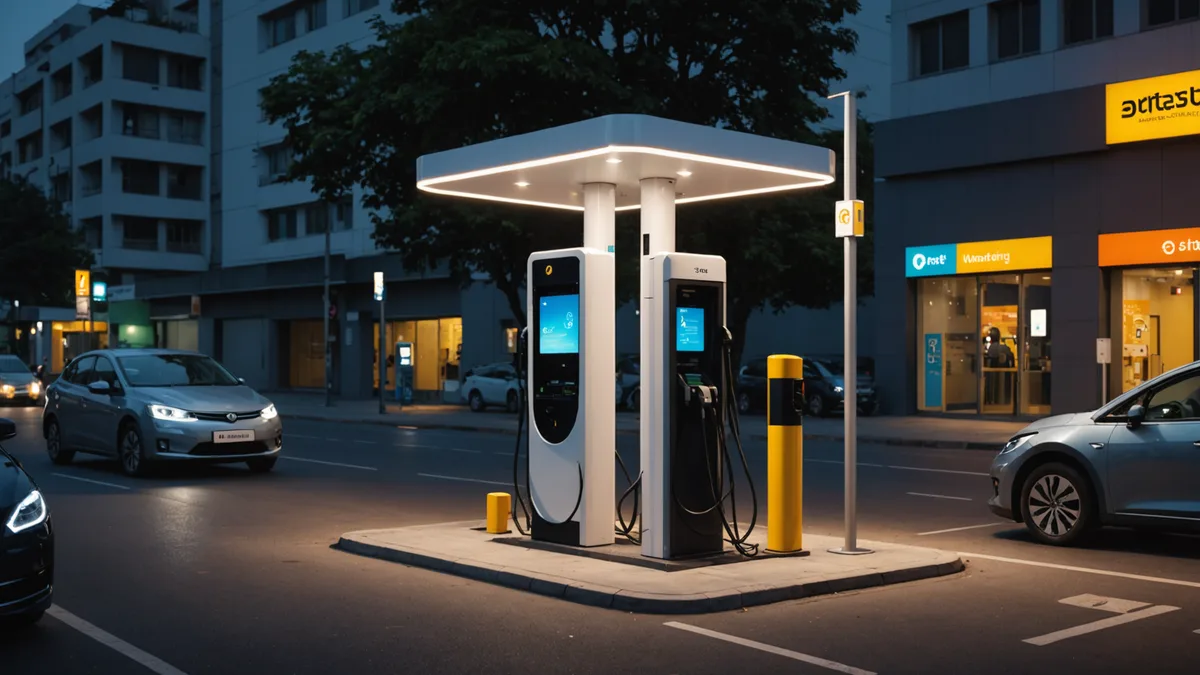
The comparison between swap networks and plug-in charging for electric two-wheelers is often framed as a technology debate. For fleet operators running delivery scooters in Indian cities, it is not a technology debate at all. It is an uptime problem. And the uptime numbers tell a clear story once you sit down and actually count the hours.
The Core Arithmetic of Fleet Downtime
A rider on a 10-hour delivery shift loses roughly two chunks of time to a standard wall-charge cycle: the first when they arrive at a charging point and wait 40-50 minutes for enough range to continue, and the second if they misjudge their range and end up stranded mid-shift. Across an eight-rider fleet, those events add up to 10-15 hours of unproductive time per day. That is not a projection. It is what we observed at multiple fleet operations in Pune before building BatteryPool.
The 90-second swap benchmark is an operational measurement: slide the depleted pack out, slide the charged one in, the rider is back on the road. The comparison to plug-in charging is not about which technology is more efficient in a physics sense. It is about which format is compatible with shift-based fleet operations where the vehicle is a working tool, not a personal device someone charges overnight.
In our Pune pilot running through Q4 2025 and into Q1 2026, we tracked uptime across three partner fleets. Riders who had previously lost 60-90 minutes per shift to charging wait time dropped to under 15 minutes for swap time. That is not a small improvement. It is the difference between a fleet that runs at capacity and one that spends a meaningful portion of its shift hours waiting at a charger.
Infrastructure Cost: Who Carries the Battery Risk
Plug-in charging infrastructure has a fundamentally different cost structure for fleet operators than a swap network. To guarantee that all eight riders on your fleet can charge without waiting, you need eight chargers, dedicated power supply, and enough space for simultaneous charging. That capital comes from the fleet's books, before a single package is delivered.
With a swap network, that infrastructure cost is distributed across all users of the network. Each station serves multiple fleets and individual riders. The fleet operator pays per swap rather than per charger unit. Battery pack lifecycle risk, the degradation that comes from fast charging and high ambient temperatures, sits with the network operator, not the fleet.
In the INR context, a commercial-grade charger for fleet use runs INR 15,000-40,000 per unit, plus installation and electrical work. For a 20-rider fleet, the capital commitment is INR 3-8 lakh before a single delivery is made. Per-swap pricing turns that capital cost into a variable cost that scales with actual utilization.
The AI Pre-Positioning Advantage
The reason swap networks perform differently from a static infrastructure comparison is that a well-run swap network is not static. Our dispatch engine pre-positions charged packs at stations based on where riders are predicted to need them, not just where a station happens to exist.
A charging station cannot do this. A charger plugged into a wall at Wakad Market is in Wakad Market whether or not any rider will need it. A charged pack can be staged. In our network, we track demand patterns by corridor and hour, and we stage inventory accordingly. A station in a high-demand corridor during the lunch delivery peak will have its pack inventory replenished before demand peaks, not after a rider shows up and finds nothing ready.
This changes the reliability equation for fleet operators. You are not just comparing the speed of a swap versus a charge. You are comparing a swap from a pre-staged inventory against a charge that depends on whether a working charger is available, whether another fleet's riders are already using it, and whether the grid connection at that location is stable at that moment.
Where Plug-In Charging Still Makes Sense
We are not arguing that plug-in charging infrastructure investment is wasted. In contexts where vehicles are parked overnight at a central depot with three-phase power access, where trips are predictable and short, or where a fleet's riders own their vehicles and can charge at home, a charging-first approach may make sense economically. The comparison we make is specific to high-utilization, multi-shift urban delivery fleets in concentrated corridors.
Some fleets in our pilot use a hybrid approach: home-based overnight charging for riders who park at their own residence, combined with swap access for midday range extension. This works for fleets where riders have reliable home charging. It does not work well for fleets operating out of a shared depot where multiple riders use the same vehicles across shifts.
The Pilot Data: What It Shows and What It Does Not
In our Q4 2025 and Q1 2026 Pune pilot, partner fleets reported substantially lower dead-battery incidents compared to their pre-BatteryPool baseline. We frame these numbers carefully because pilot conditions are different from steady-state operations. The corridor coverage was concentrated in Baner and Wakad first, so riders in those zones saw better availability than they would in a network with coverage gaps elsewhere.
We also saw the swap network's limitations. During a stretch in November 2025 when one of our 12+ stations experienced a power interruption, the nearby corridor saw a spike in rider detour time. Any honest evaluation of swap infrastructure needs to account for station availability as an ongoing operational variable, not just a design-time specification. The 90-second swap time is meaningful. The reliability of the network providing a charged pack to swap is the underlying dependency that makes it work.
For fleet operators evaluating the choice: map your corridor against current swap network coverage, ask about station uptime SLAs, and compare the total time your riders spend on energy management today against the per-swap cost. For high-utilization urban delivery in covered corridors, the comparison favors swap. For other fleet configurations, the answer is less clear-cut and worth modeling with your actual route and shift data.