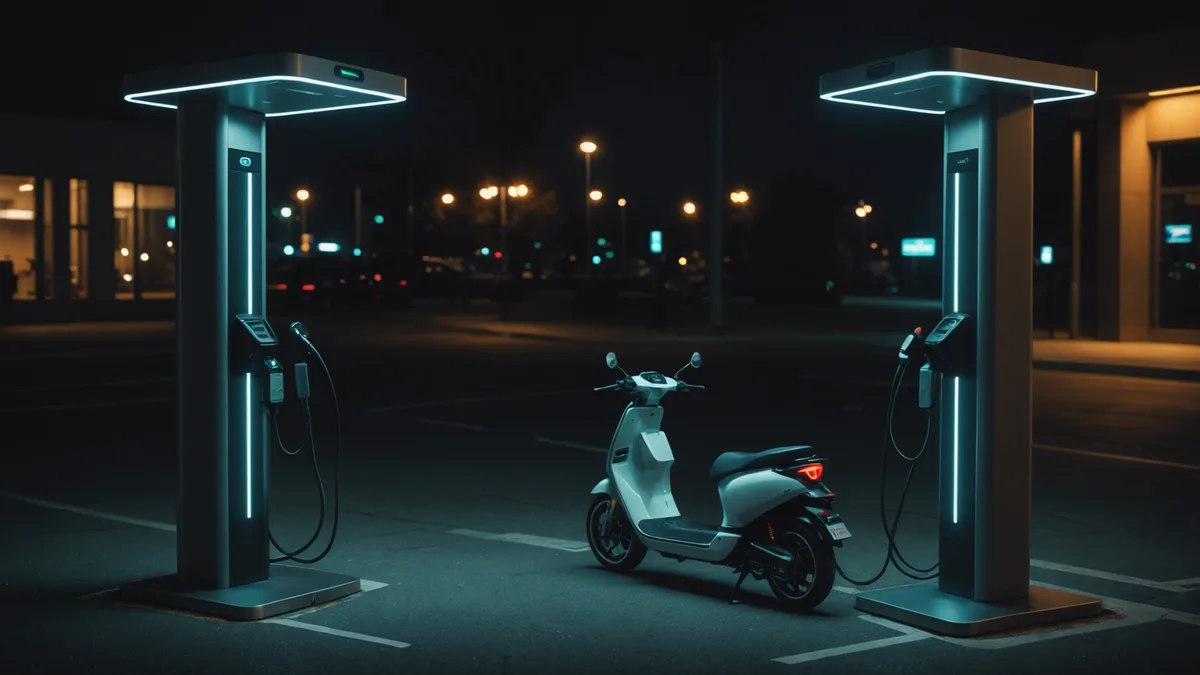
The conversation about smart charging infrastructure for electric vehicles has been dominated, appropriately, by grid considerations. Vehicle-to-grid integration, off-peak charging incentives, demand response programs that flatten peak load: these are real and important mechanisms for managing grid stress as EV penetration grows. The policy documents and infrastructure planning documents are full of this language, and most of it is technically sound.
For an eight-rider delivery fleet in Pune running electric scooters on a 10-hour shift schedule, this conversation is largely not about them. Their question is simpler and more immediate: can my riders get a charged vehicle and get back on the road quickly enough to make a delivery shift economically viable? The infrastructure debate that matters for their decision is a different one.
What Smart Charging Is and Is Not
Smart charging, in the technical sense, refers to charging systems that can modulate charge rate, timing, and in some cases direction based on grid signals, price incentives, or local demand management. A smart charger might throttle charge rate during peak grid demand periods, delay charging starts until off-peak rates apply, or in V2G configurations, export energy back to the grid during peak periods.
These capabilities are genuinely valuable in contexts where they can be operationalized. A depot with 20 vehicles parked overnight can schedule charging to begin at 2am when grid load is low and electricity rates are lower. The fleet operator captures the rate savings. Grid operators benefit from demand smoothing. This is a real efficiency gain that the fleet-charging model enables and the swap model does not.
The operational prerequisite for smart charging to deliver these benefits is that vehicles are parked for extended periods on a predictable schedule, connected to smart-enabled chargers, in a depot environment where overnight or dwell-time charging is the default. Not all urban delivery fleet operations match this description.
The Fleet Configurations Where Swap Beats Smart Charging
Urban last-mile delivery fleets in Indian cities often run one of several patterns that do not match the smart charging prerequisite. The first is the distributed rider model: riders own or lease their own vehicles and operate independently. There is no central depot. Overnight charging happens wherever the rider parks, often at their residence, on a basic 5A outlet, without any smart charging infrastructure. The fleet operator has no control over when or how the vehicles charge.
The second pattern is multi-shift vehicle sharing: a fleet of 10 vehicles is used by 20 riders across two shifts. Night shift riders return vehicles at 6am; morning shift riders need them ready at 7am. Overnight charging does not exist as a window; the vehicle needs energy replenishment within a one-hour handoff window. Smart charging cannot help here because the dwell time is too short to exploit off-peak windows.
The third pattern is the high-utilization single-shift model where a rider operates 10-12 hours per day and exhausts their battery at least once mid-shift. Any energy supply solution that requires a 40-60 minute stop is a significant operational constraint regardless of how smart the charger is.
The V2G Question for Two-Wheelers
Vehicle-to-grid for two-wheelers in India deserves a brief treatment because it comes up in infrastructure planning conversations. Current electric scooters sold in India are almost universally not V2G-capable. The battery pack and inverter architecture required for bidirectional power flow is a meaningful hardware cost addition, and it has not been widely incorporated into the two-wheeler segment as of early 2026.
Even if V2G capability were available on current scooters, the economic case for a delivery rider to export energy back to the grid during peak periods runs directly against their need to maintain charge for delivery work during those same peak periods. The rider's peak earning window and the grid's peak demand window overlap substantially. A rider who exports energy at 12pm to earn a V2G incentive and then cannot complete their afternoon deliveries has made a poor economic trade.
V2G for commercial electric two-wheelers may become relevant eventually for vehicles that are idle during peak grid demand periods, but the urban delivery use case is specifically not that vehicle profile.
Where the Two Approaches Should Coexist
We are not arguing against smart charging investment. The right context for smart charging in the two-wheeler segment is depot-based fleets with centralized overnight parking and vehicles that are genuinely idle for 8-10 hours per day. That describes some fleet configurations. For those fleets, smart charging captures real cost savings that a swap model cannot, because the swap model's efficiency gains come from shift-time availability, not overnight energy cost arbitrage.
The policy debate tends to treat smart charging as the solution to EV infrastructure for all vehicle types and use cases. For passenger vehicles parked in apartments and commercial parking lots, that is roughly correct. For high-utilization commercial delivery fleets in dense urban corridors, the answer is more nuanced. Some of those fleets need smart depot charging. Others need dense swap networks. Many need both for different parts of their rider base.
The Real Infrastructure Gap
In our observations operating the BatteryPool pilot through Q4 2025 and into Q1 2026, the infrastructure gap that actually limits fleet operations in Pune's delivery corridors is not a lack of smart charging capability. It is a lack of convenient, reliable energy access at any speed during mid-shift operational hours. Riders are not being blocked by dumb chargers when smart ones would fix it. They are being blocked by long waits at any type of charger because the supply of charged vehicle capacity is too thin relative to the number of riders who need it.
The question for policymakers and fleet operators evaluating infrastructure investment should start with the specific fleet configuration: what shift pattern, what parking model, what corridor density? The answer shapes whether smart charging, swap networks, or some combination is the appropriate infrastructure path. Defaulting to the grid-optimization narrative without examining those operational realities leads to misallocated investment for the high-utilization urban delivery case.